

The RBA's 25bp hike on 30 September took the cash rate to 4.60% – its highest level since 2011 – and we expect one final move in November. History says this is usually the point where investors start to look through the rate pain and rebuild exposure to the domestic cyclicals. We think that is only half right this time. The end of the hiking cycle is in sight, but the pressure on housing and the consumer is about more than interest rates.

1. The end of the hiking cycle is in view
Long-end bond yields have moved back to levels last seen around 15 years ago. By historical standards this hiking cycle has been moderate in both pace and size, and we expect a final 25bp move in November to be the last of it.
The more important signal is relative value. The 10-year government bond now yields about the same as the ASX 200's earnings yield – a convergence last seen in October 2007. When a risk-free asset offers the same yield as equities, the bar for equity returns rises. It is a classic late-cycle marker, and a reason to be selective rather than broadly risk-on.
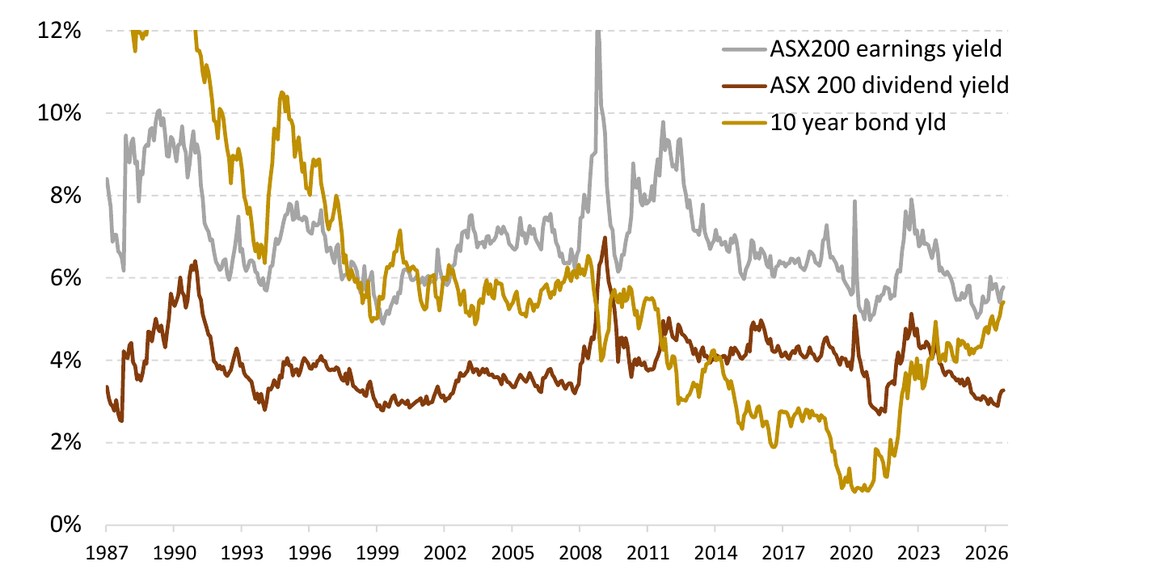
Figure 1: The 10-year bond yield has converged with the ASX 200 earnings yield
Source: UBS, LSEG

2. What history says about the final hike
Across the four RBA cycles since 1992, excluding the GFC, a consistent pattern emerges. The aggregate market has typically bottomed around four months before the final hike and traded flat to higher afterwards. The domestic GDP plays – Banks, Insurance, Real Estate and Builders – trough around the same point, roughly four to five months before the last hike, then lead through the rate plateau and into the first cuts. Defensives tend to lag over the final months as money rotates back into domestic cyclicals.
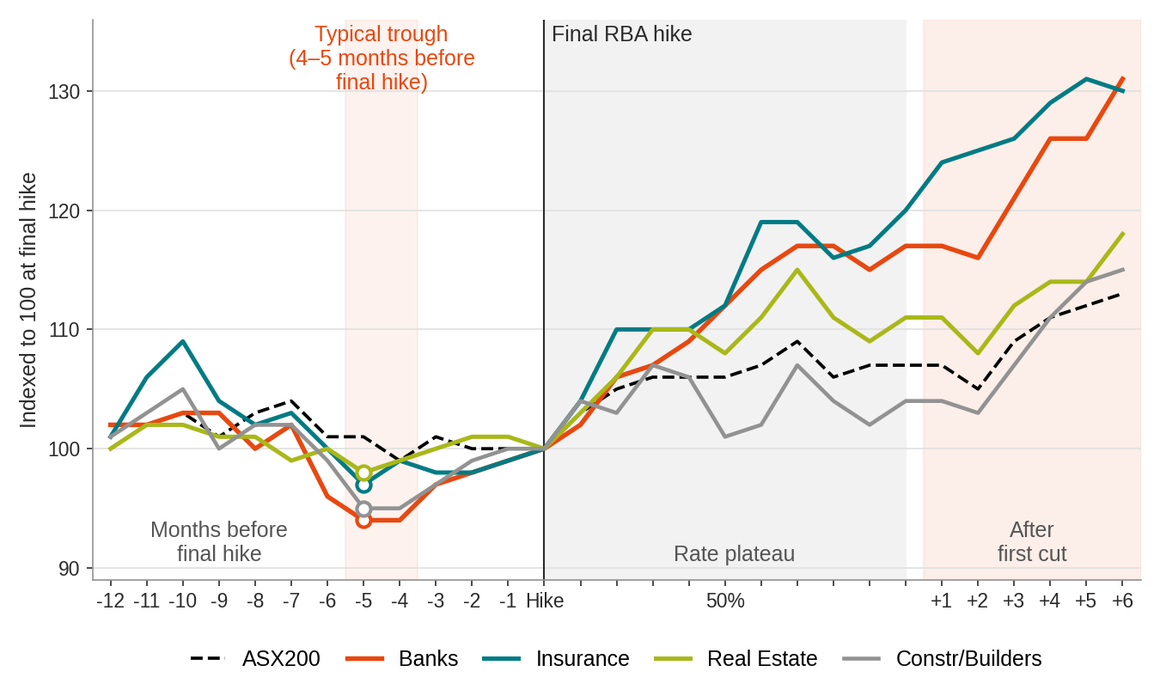
Figure 2: Domestic cyclicals have typically bottomed 4–5 months before the final hike
Source: GP Wealth, based on UBS and LSEG data. Average of four RBA cycles ex-GFC (cash rate peaks Dec-94, Aug-00, Nov-10, Nov-23); circles mark the trough.
Two caveats. First, the GFC: in 2008 stocks kept falling even as the RBA cut, because the economic cycle mattered more than the rate cycle. Second, the starting point. The ASX 200 ex-Resources trades on a forward PE of 18.7x, higher than at any comparable point in past cycles, which leaves less cushion if growth disappoints. Four cycles is also a small sample – a guide, not a rule.
3. Why this time may be different
New Zealand and Canada show that once stretched property markets roll over, the hangover can last well beyond the rate cycle. Here, housing faces the removal of favourable tax treatment under the government's May changes, and the prospect of slower population growth as both sides of politics lift their rhetoric on migration.
That is why we stay underweight Banks. At a PE relative to the market of 0.95x against a long-run average of 0.9x, they are not expensive – but in the last period of structural pressure (the Royal Commission and macroprudential tightening in 2018–19) they fell below 0.8x, and we expect loan growth and bad debts to deteriorate from here. Consumer Discretionary also still looks richly priced against the last time the cash rate was this high.
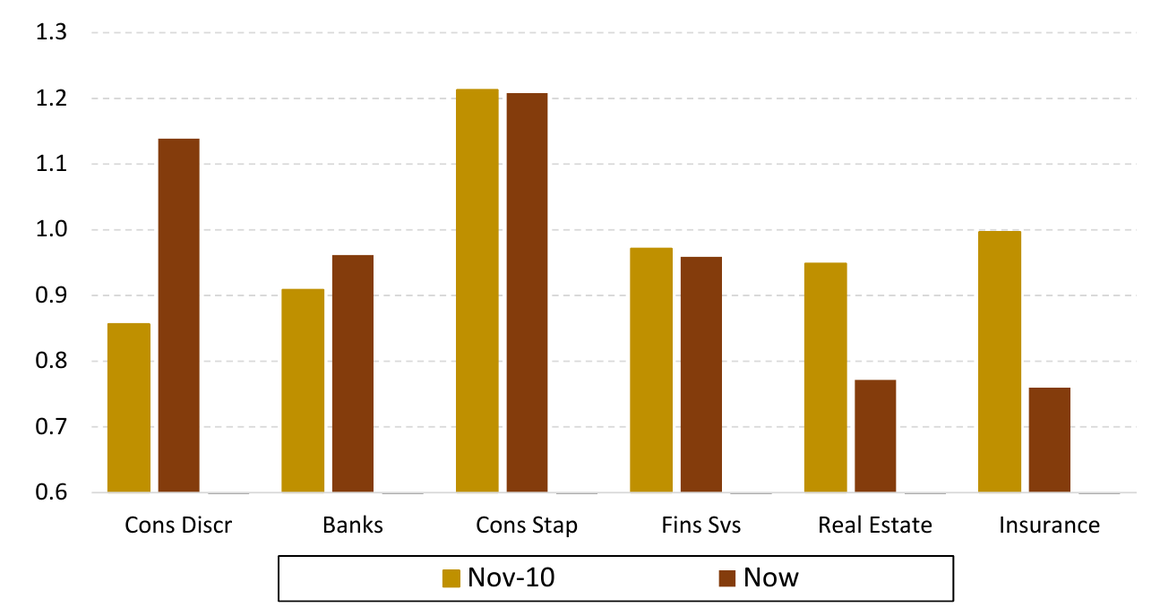
Figure 3: PE relative to ASX 200 ex-Resources – now vs the last time the cash rate was this high
Source: UBS, LSEG
The dispersion is the opportunity: Real Estate and Insurance trade at far softer relative valuations than they did in 2010.
4. Sector calls – what's changed
Source: UBS
What struck us is how little of this is in the price. The most 'AI-ready' stocks do already trade at a 10-point PE premium and an 80% relative ROE premium to their less-favoured peers. But across its entire coverage, only six companies are determined to be fully priced for AI success – CBA, Macquarie, BHP, Rio Tinto, Technology One and Megaport. If even moderate adoption plays out, most of the ASX 200 has upside risk to earnings.
5. Where we see the opportunity
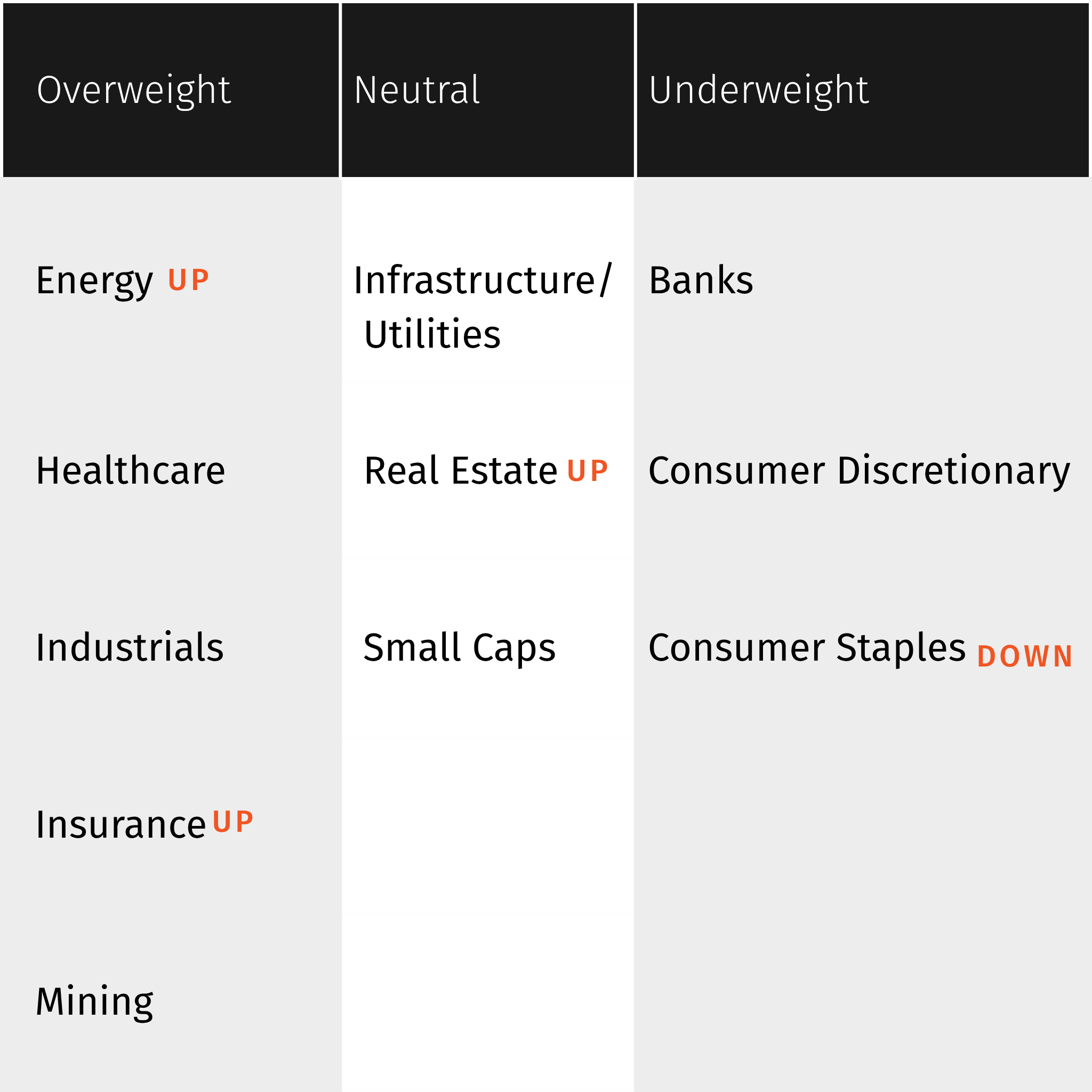
We stay with 'Capex over Consumer'. In a higher-inflation, investment-led world, Mining and Industrials remain best placed, now joined by Energy: demand drivers are strong, and many are net beneficiaries of the capacity constraints running through the economy. It is the same investment cycle we wrote about in July, and we see no reason yet to step away from it.
Within Financials, we prefer insurers to banks – valuation support plus a natural hedge if bond yields keep rising. In Real Estate, the case is for rebuilding selectively towards neutral rather than chasing the sector outright, given the structural headwinds to housing.

Our view. The end of the hiking cycle is close, and history argues for rebuilding domestic cyclical exposure before the RBA has finished. We would do it selectively. Real Estate and Insurance offer genuine valuation support; Banks and the consumer do not yet price the structural headwinds from the tax changes and slower population growth. With equities now yielding no more than bonds, we favour valuation support and quality over broad market exposure, and keep the core of portfolios in the miners, industrials and energy names riding the capex cycle.
If you'd like to discuss how these themes may apply to your portfolio or investment strategy, feel free to get in touch.