
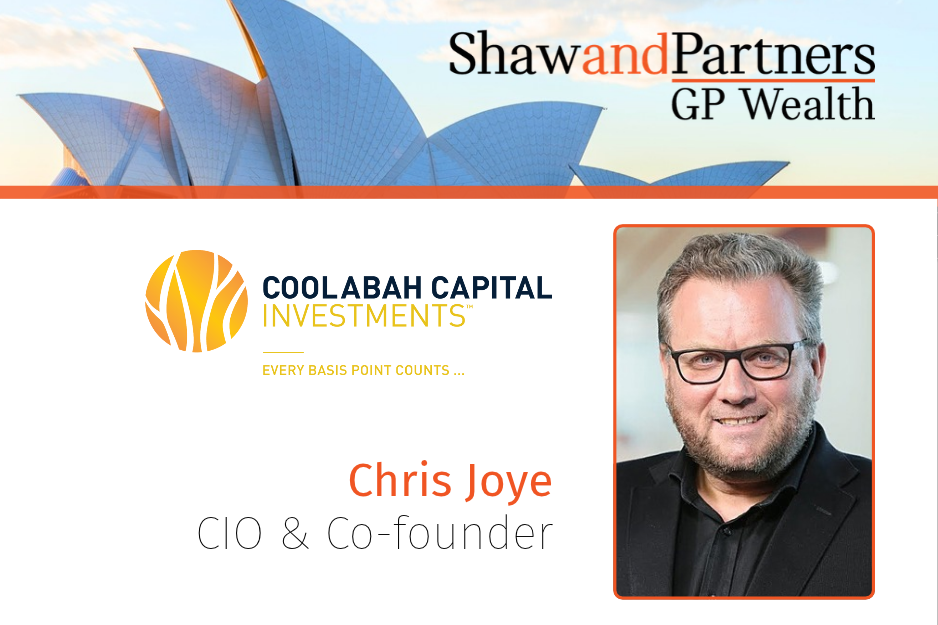
Growing wealth is only half the story. Protecting it matters just as much. That idea sits at the heart of how we think about portfolios at GP Wealth, and it ran through our recent conversation with Chris Joye of Coolabah Capital.
Chris shared his views on interest rates, the housing market, bank stocks and the role of AI in the global economy. Below are the themes we think matter most for investors, followed by the full interview.
Watch the full interview with Chris Joye
Chris covers each of these themes in detail, along with the 60/40 portfolio, hyperscaler bonds and what he sees as the biggest risk nobody is discussing.
Why interest rates may stay higher for longer
Why interest rates may stay higher for longer
Chris argues that a second round of rate rises is usually harder than the first. In his view, the first tightening cycle ended before inflation was fully contained, and the work of bringing it down now falls to the second.
If inflation proves sticky, he believes the RBA cash rate may need to rise well beyond where it is today. He also suggests a multi-year tightening cycle is the risk investors are discussing least.
What this means for investors: higher rates affect borrowing costs, bond prices and equity valuations at the same time. A portfolio built only for lower rates may be exposed.
What falling house prices could mean for banks and household wealth
Housing is central to Australian household wealth, so Chris’s views here are worth understanding, even if you don’t share them.
He expects a significant property correction. He also sees housing as one of the main ways interest rate changes reach the economy, because falling home values can soften confidence and spending. On bank stocks, he argues that slower credit growth could weigh on earnings.
What this means for investors: if a large share of your wealth sits in property, it’s worth checking how concentrated your position is, and how much flexibility you have if conditions change.
Protecting wealth in a higher-rate environment
This is where Chris’s thinking aligns most closely with our own preservation focus. He outlines three principles:
Stay liquid. Access to cash gives you options when markets move.
Favour seniority. Investments that rank higher in the capital structure are generally better protected if borrowers come under strain.
Be selective with credit risk. He points to record insolvencies as a reason for caution.
He also draws a clear line between fixed-rate and floating-rate investments. When rates rise, floating-rate income can adjust upward, while fixed-rate bonds typically fall in price. Not every defensive asset behaves the same way, and the difference matters.
On the classic 60/40 portfolio, Chris suggests the bond component deserves a closer look, since the mix of bonds you hold affects how the portfolio behaves in different conditions.
AI, inflation, gold and the US dollar
Many people expect AI to be disinflationary. Chris takes the opposite view for the short to medium term. He argues that the scale of AI investment is adding to inflation and pushing rates higher, and he points to the early 2000s technology boom as a reminder that higher rates can eventually weigh on growth.
On other assets, he sees a place for gold, remains sceptical of crypto, and expects the US dollar could strengthen if the Fed keeps tightening.
Speak with GP Wealth
At GP Wealth, GP stands for growth and preservation. We build multi-asset, diversified portfolios designed to grow wealth and protect it through changing conditions.
If you’d like to understand how these themes apply to your portfolio, get in touch with our team for tailored advice.
General advice only. This does not take into account your objectives, financial situation or needs. Views expressed are those of the speaker, Chris Joye, and not necessarily those of GP Wealth. Consider the relevant Product Disclosure Statement before making any investment decision. Past performance is not a reliable indicator of future performance.